
Braintrust vs Noveum: Which AI Agent Evaluation Platform Wins in Production?
An honest comparison of active observability and playground-based evals versus automated production scoring, voice pipeline evaluation, and self-healing fix reports, for AI teams deciding what they actually need.

Best for teams shipping AI agents in production who need continuous automated evaluation, voice pipeline scoring, and fix reports generated and backtested for them, not just experiments to run manually.

Best for teams that want a mature playground for prompt iteration, deep experiment tooling, and a large-scale observability database with framework-agnostic tracing.
Which tool is right for you?
What is Braintrust?
Braintrust is an active observability platform for AI agents, organized around Observe, Evaluate, and Discover. Teams use it to trace production, run offline experiments, catch regressions with CI/CD gates, and cluster patterns automatically with Topics. It ships an AI assistant called Loop that suggests prompt improvements inside the platform.
What is Noveum AI?
Noveum AI is a production AI agent evaluation and auto-remediation platform. It scores every trace with 100+ built-in scorers, runs automated root cause analysis, and ships a validated fix back to your repo through NovaPilot, its auto-remediation agent. It is the only platform in its category with dedicated voice pipeline scorers and a synthetic voice, text, and phone testing system called NovaSynth.

Noveum ships the fix. Braintrust ships the observation.
Noveum is the Braintrust alternative built for teams running agents in production who need more than a trace to look at. You connect your stack, and 100+ scorers run on every trace automatically, covering hallucination, faithfulness, RAG quality, tool-calling accuracy, safety, and voice pipeline performance.
When something breaks, NovaPilot reads the failure pattern, tests multiple prompt variations across four evolutionary generations, and hands your engineers a validated fix backtested against the failing trace. No manual review queues. No annotation sprints. No debugging sessions that stretch into days.

Where Noveum goes further
Three things Braintrust does not do that matter once your agent is live
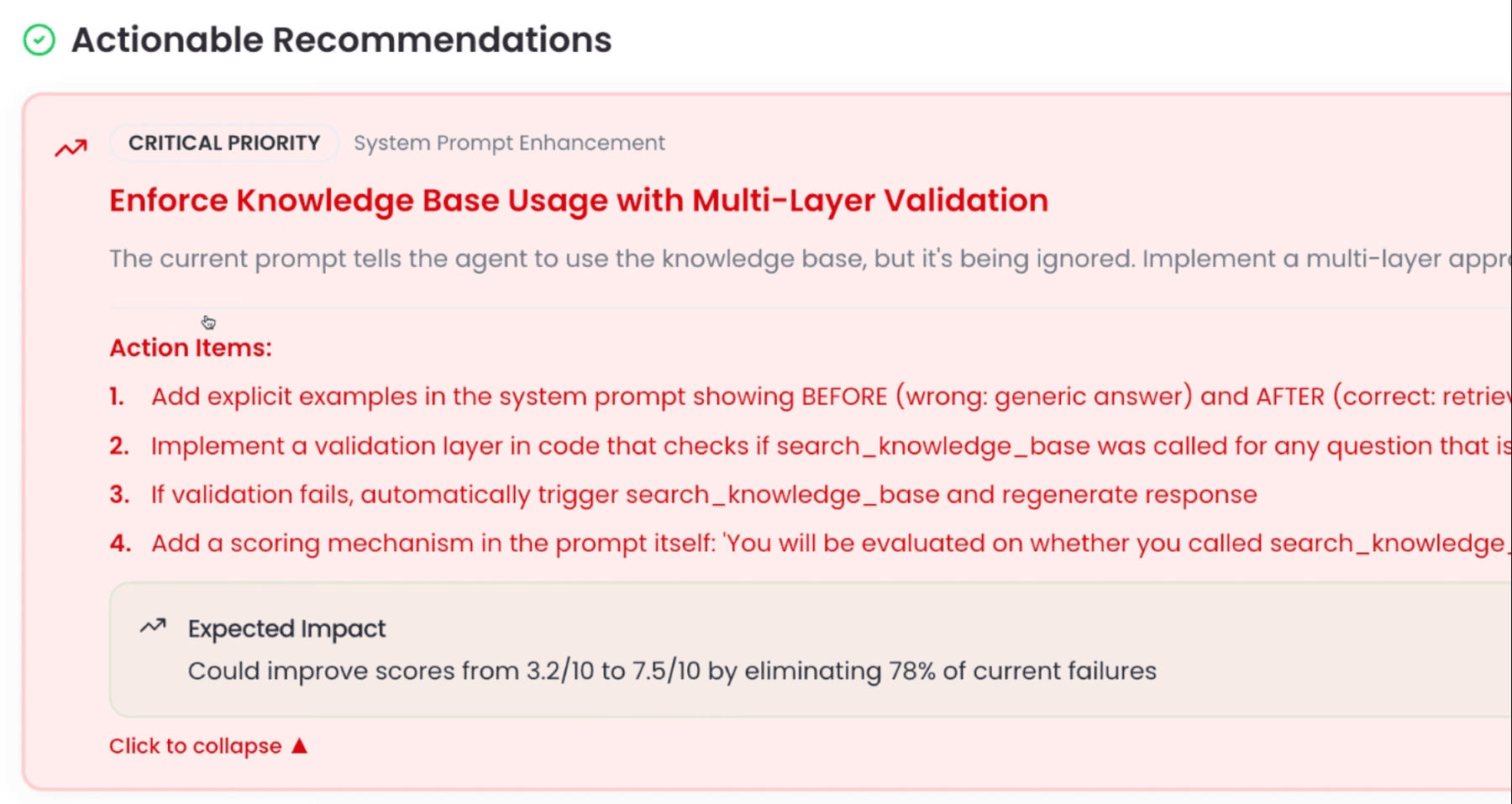
Your next production bug should come with its own fix attached.
Noveum's NovaPilot reads every failure pattern, groups root causes, and generates a structured improvement report covering your prompts, tool calls, and workflow logic. It tests multiple prompt variations across four evolutionary generations and hands your engineers a fix backtested against the actual failing trace. Braintrust's Loop suggests prompt changes inside the platform, and Behavior specs give you a way to judge whether an agent followed the intended process. Both stop at recommendation and judgment. From that point, an engineer still applies the change, reruns the eval, and ships the fix.
See how NovaPilot works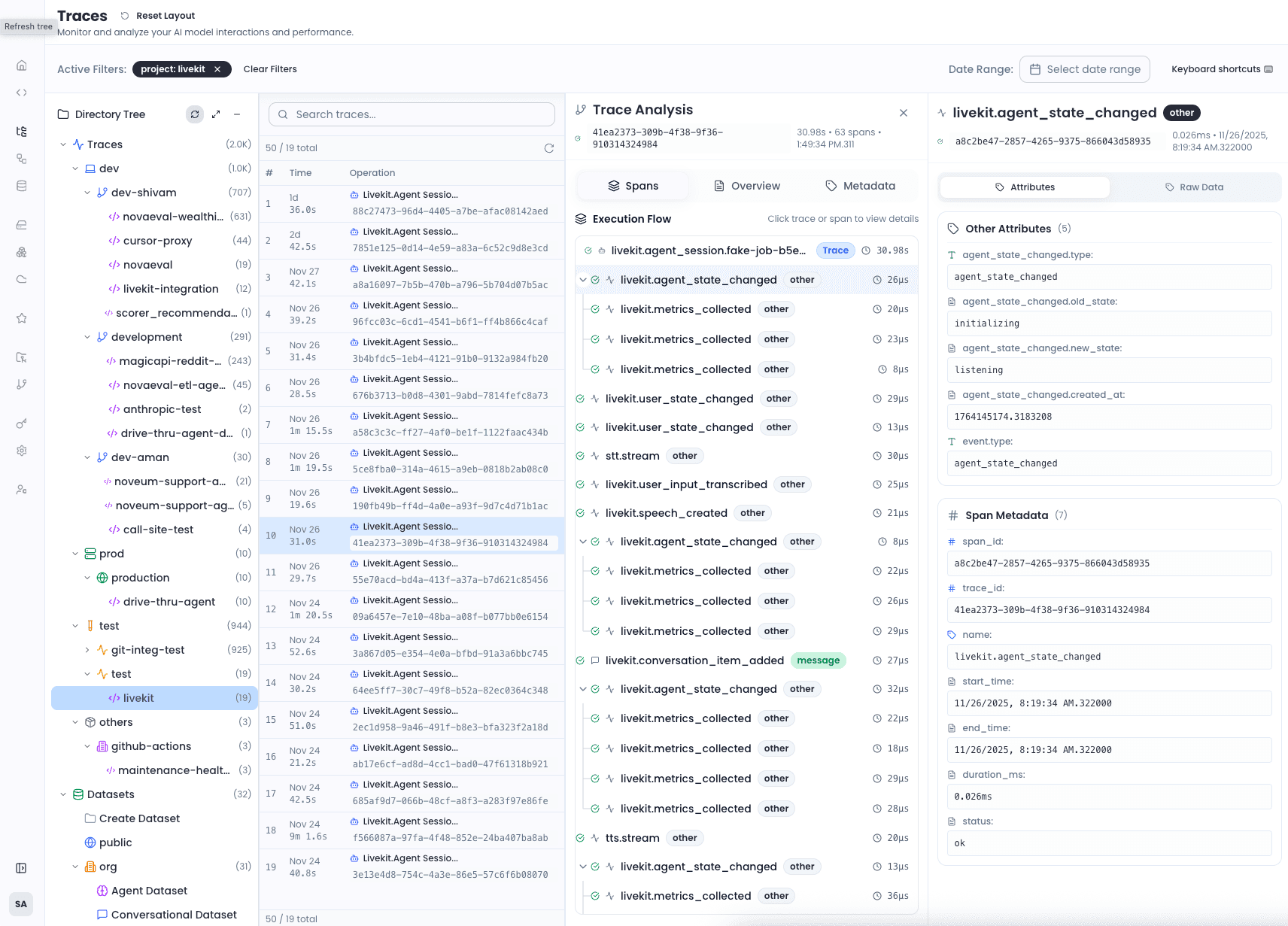
Test your voice agent before your users ever hear it.
Noveum's voice scorers cover TTS quality, response latency, mispronunciation, interruption detection, and tone consistency. NovaSynth takes it further: you define realistic personas, write test scenarios, and NovaSynth runs those conversations through your live agent via voice, text, or phone at scale. Every session is automatically scored. Braintrust has no dedicated voice pipeline scorers and no synthetic voice or phone testing system that runs through your live agent.
Explore NovaSynth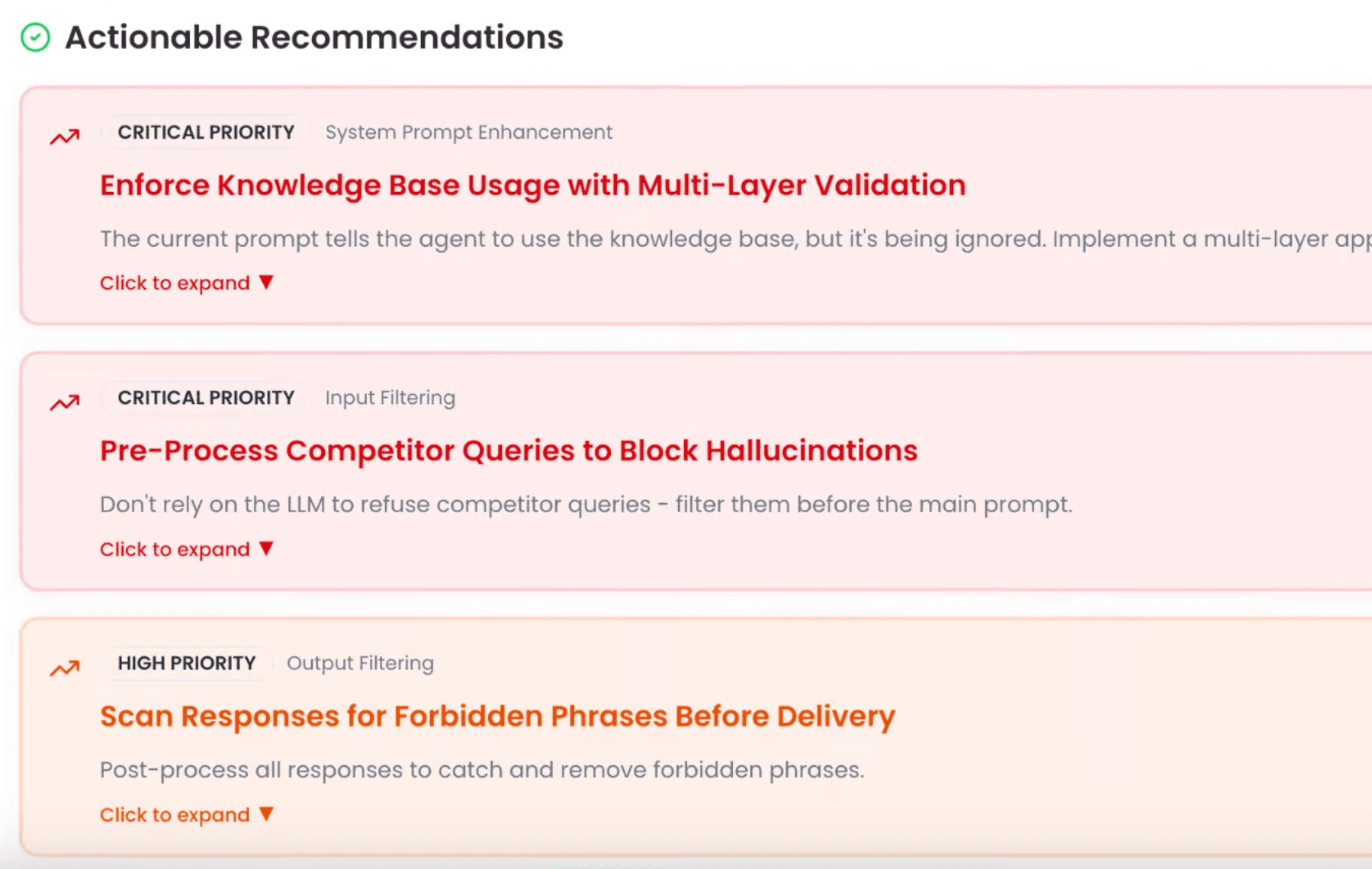
Judge speed matters. Ours returns a verdict in 0.59 seconds.
For real-time gates and high-volume scoring, a slow judge is a non-starter regardless of accuracy. In the June 2026 benchmark, Noveum's judge returned a verdict in 0.59 seconds, the fastest of the eight platforms tested. Braintrust's judge came in at 3.30 seconds, 5.6 times slower on the identical local judge-model call. That difference decides whether an eval can sit inline in a request path or has to run out of band, and it compounds at production trace volume.
See the benchmarkPricing at a glance
Org-flat, credit-based billing
Platform fee plus usage meters
Predictable credit-based billing. No compound usage meters.
Noveum's plans are org-flat with one credit currency covering evaluation, NovaSynth testing, and NovaPilot analysis. You pay for what your agents produce, not seats, spans, or tokens billed separately. Braintrust Starter is $0 with $10 model credits, 1 GB processed data, and 10K scores included, then $4/GB and $2.50 per 1K scores. Braintrust Pro is $249 per month with $249 model credits, 5 GB processed data, and 50K scores included, then $3/GB and $1.50 per 1K scores, plus token rates once model credits are exhausted. Those three meters (model credits, processed data, and scores) compound as volume grows. For a team running real production traffic, Noveum keeps the bill predictable as evaluation volume scales.
Common questions
Common questions
How quickly can I start getting evaluation scores with Noveum AI?
Most teams have scored traces running within 15 minutes. Install the noveum-trace SDK, wrap your LLM calls with the context manager, and 100+ scorers start running on every trace immediately. No eval infrastructure to configure, no expected answers needed, and no annotation work before you see real quality signal. In a June 2026 benchmark of eight LLM evaluation platforms, Noveum was also the only platform to ingest raw production traces with zero manual field-mapping, producing 440 ready-to-score items automatically.
What is NovaPilot and how does it turn a failure into a shipped fix?
NovaPilot is Noveum's auto-remediation agent. When Noveum detects a failure pattern, NovaPilot identifies the root cause, groups similar failures by category, and tests multiple prompt variations across four evolutionary generations. It hands your engineers a structured improvement report backtested against the failing trace, or opens a pull request directly. That report is developer-ready: drop it into Cursor, Claude Code, or any IDE. Braintrust's Loop suggests prompt improvements inside the platform, but an engineer still applies and reruns the change.
Our agents handle domain-specific workflows. Can Noveum evaluate beyond generic metrics?
Yes. The Enterprise plan includes custom scorer development built around your product's specific evaluation logic. Domain-specific scorers sit alongside Noveum's 100+ built-in metrics and run in the same automated pipeline. A financial services team can score regulatory compliance. A healthcare team can score clinical accuracy. A voice AI team can score call-handling quality. You define what good looks like for your domain, and Noveum runs it at scale continuously without manual review cycles.
How did Braintrust score in the 2026 AI Eval Platform Benchmark?
Braintrust ranked 7th of 8 platforms on the composite score. Its ClosedQA scorer posted the study's lowest false-alarm rate at 8%, which is a strong calibration for autonomous gating. However, Braintrust ships no dedicated tool-call or role-adherence scorer, scoring 0.000 on both normalized dimensions, and its autoevals library shows a 58-point false-alarm swing between the ClosedQA and Ragas scorers on identical turns. Judge latency was measured at 3.30 seconds versus Noveum's 0.59 seconds on the same local judge-model call, roughly 5.6 times slower.
Does Braintrust have automated fix generation or voice pipeline evaluation?
No to both, as of the current product. Braintrust ships Loop, an AI assistant that suggests prompt improvements based on annotations you leave in a playground, but the engineer still applies the change, reruns the eval, and ships the fix. Braintrust's Behavior specs standard judges whether an agent followed a defined process across a whole trajectory, but does not generate a fix. There are no dedicated voice pipeline scorers and no synthetic voice or phone testing system in Braintrust's product.
How does Noveum pricing compare to Braintrust pricing?
Both platforms have a free tier and neither charges per seat. The structural difference is how costs grow. Noveum is credit-based with a single currency for evaluation, NovaSynth testing, and NovaPilot analysis, with plans from $0 to $599 per month and no separate meters stacking on top. Braintrust Starter is $0 with $10 model credits, 1 GB processed data, and 10K scores. Braintrust Pro is $249 per month with $249 model credits, 5 GB processed data, and 50K scores, then overages of $3/GB and $1.50 per 1K scores plus token rates once model credits are exhausted. As evaluation volume scales, Noveum stays predictable while Braintrust compounds across model credits, processed data, and scores.
Our take
Noveum is built for teams that need the evaluation and fix loop to run on autopilot. You get 100+ scorers firing on every production trace from day one, voice pipeline scoring that catches audio failures before users hear them, NovaSynth synthetic sessions that test your agent before launch, and NovaPilot converting every failure pattern into a validated, backtested fix report or a pull request. In an independent June 2026 benchmark of eight LLM evaluation platforms, Noveum achieved the highest composite accuracy score of 0.999, with a judge running at 0.59 seconds per call, and was the only platform to ingest raw production traces without manual field-mapping.
Braintrust is a serious platform that has shaped how AI teams think about evaluation. The Braintrust playground is a category-defining product for prompt iteration, Brainstore is a purpose-built database for agent trace scale, Topics automates pattern discovery across production traffic, and the Braintrust Gateway gives you one API across every major provider. Their July 2026 Behavior specs standard is a rigorous public framing of process supervision for long-horizon agents. Notion, Vercel, Cloudflare, Dropbox, and Coursera all use it to run evals at scale, and their engineering credibility is real.
But observing what happened is not the same as knowing what to fix. In the June 2026 benchmark Braintrust ranked 7th of 8 platforms on composite score with a judge 5.6 times slower than ours. If your agents are live, if failures are happening right now, if any part of your product speaks instead of types, or if you need the loop from a failed trace to a shipped fix to run without an engineer in the middle, Noveum is the Braintrust alternative that closes it.
Next step
Put your agents in the loop
Production AI agents your customers can trust.
Trusted in production by enterprise and high-growth teams